First you go to the museum with the music signs on it. Then you go inside and run to the right. Until you find the bucket that has the reed pipes in it. You click on it and you get a reed pipe. The go up to the statue on the second row with the reed pipe. You click on her so she gives you a lesson on how to play. Ask her to teach you a song on your reed pipe. She says you must prove yourself first. Repeat the pattern of colors on the reed pipe to pass the test. She teaches you the song and tells you to play it for Cerberus to make him fall asleep. Walk to your left to exit the temple. Mythology Island is Poptropica’s 12th island. It was released on April 1, 2010 for members and April 29, 2010 for non-members. It was re-released as a SUI (sound-updated island) with music and a bigger screen on April 25, 2014 for members and May 3, 2014 for everyone. Common room: Midas’ Gym.
This guide to Mythology Island will help kids discover Greek mythology as they explore Mount Olympus with Apollo, Athena, Hercules, Zeus, and the other gods who will be referenced throughout a lifetime of reading.
Poptropica is one of the Internet's most popular sites for kids—and now it's available as an app for the iPad! It's not just a place to play games; each of the islands featured on the site provides a learning opportunity.
Poptropica Cerberus Tune
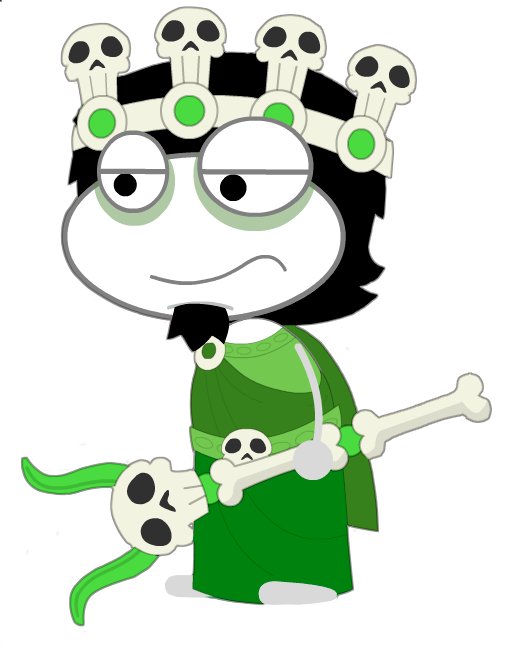
Poptropica Cerberus Song
by Holly Poulos
This guide to Mythology Island will help kids discover Greek mythology as they explore Mount Olympus with Apollo, Athena, Hercules, Zeus, and the other gods who will be referenced throughout a lifetime of reading. Poptropica is one of the Internet's most popular sites for kidsâand now it's available as an app for the iPad! It's not just a place to play games; each of the islands featured on the site provides a learning opportunity.
Lessons & Activities
Worksheets: Print or Project
Related Resources
Common Core Alignment

Poptropica Cerberus Whisker
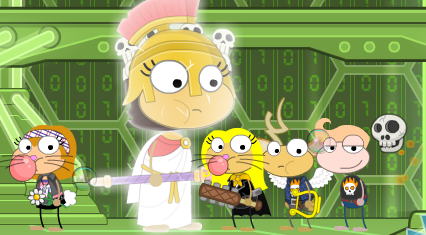 Mythology Island is full of educational opportunities to share with your students. Enjoy the following lessons, classroom discussions, and activities in your classroom, and find out why Poptropica is so popular with kids!
 - A Hero's Quest
On Poptropica's Mythology Island, Zeus gives our hero a quest to gather five items as a way to gain immortality (such as taking a whisker from the head of Cerberus, and getting the ring from Minotaur's nose). In the classic Greek myth, Hercules is also given an 'impossible' taskâcalled the Twelve Labors of Herculesâin order for Hercules to gain back his honor (which he lost when, under Hera's spell, he killed his wife and children). Learn more about the Twelve Labors in this activity:Heroes in Greek Mythology
Grades 3-6
Then, discuss tasks and rewards. In school and at home, we often have to achieve certain goals in order to be rewarded. For example: at home, do students have to clean their rooms as a way to earn TV time? At school, completing homework is necessary for recess, perhaps. Have students make a list of the different tasks/rewards they have in their daily lives. Do students think it's important to achieve goals in order to be rewarded? Why or why not? *See alignment to the Common Core State Standards - The Drachma and the Euro
On Mythology Island, Hercules offers autographed photos for 10 drachmas. Outside the Pit of Hades, our hero is given the task of cleaning graffiti for 1 drachma. Drachmas (or drachmae) are the form of currency (money) used in Greece in ancient times, and in modern history. Do an image search on Google or another search engine for 'Greek drachma' and 'ancient Greek drachma' to see examples of this money, in coin and paper form, throughout history. Project it on your Whiteboard, if possible. Then, complete this activity:Buying and Selling in Ancient Greece
Grades 3-6
Discuss currency in Greece today. Greek citizens use the euro, a form of currency utilized in several countries across Europe. Ask students to research the history of the euro, using this article on Infoplease, other websites, or the reference library. Use this political map of Europe to show where each country listed is found.- When was the euro adopted? [January 2002]
- Which countries adopted the Euro? [Austria, Belgium, Finland, France, Germany, Greece, Ireland, Italy, Luxembourg, The Netherlands, Portugal, and Spain]
- Have other countries exchanged their country's currency for the Euro since this initial adoption? [Yes; Slovenia, Cyprus, Malta, Slovakia, Estonia]
- What's the current exchange rate for the U.S. dollar (or your local currency) and the Euro? [Varies; use http://www.xe.com/currencyconverter/ for live updates]
- Make a grocery shopping list. Using websites for different stores in your area, determine the cost of each item on your list, in USD. Then, convert each amount to Euros, using the current exchange rate. Lastly, convert each amount to drachmas, using the exchange rate for the time the euro was adopted in Greece.
*See alignment to the Common Core State Standards - Mythological Monster Mash
On Poptropica's Mythology Island, our hero encounters many monsters along with the gods and goddesses. For example: Cerberus, the three-headed dog; Minotaur, who is half bull, half man; and Medusa, the monstrous woman with snakes for hair.
Imagine a new monster that rivals this fearsome collection. What are his/her features and powers? Is he part animal? Does she breathe fire? Be as descriptive as possible. Give your monster a name (forgo Sarah and Peter and try something as imaginative as Cyclops or Chimera), and draw its picture. Then, write a story where your monster encounters one of the ancient gods or goddesses, or even a mortal, like our hero in Poptropica. Why do they meet? What happens to them? You can write from the point of view of the hero or the monster. Your choice! *See alignment to the Common Core State Standards - Family is Complicated
In Greek mythology, many of the characters are related. For example, Poseidon and Hades are brothers to Zeus; Zeus is married to Hera and they have a son named Hephaestus; Apollo, Athena, Hermes, and Artemis are also Zeus's children. It can be confusing to keep them all straight! Fill out a family tree for Zeus's extended family. Use what you've learned in Poptropica, but you may have to do research elsewhere as well. Bonus points for gods and goddesses not mentioned in the game! Use this printable as a guide, or create your own chart. Â Â - It's To Die For!
After entering Herc's Hero Hut, our hero encounters two ladies discussing, among other things, the pomegranate punch that is for sale. One says, 'It's to die for!' This type of expression, where the speaker doesn't literally mean what she is saying but is saying something for effect, is called an idiom. Other examples of idioms include:- trick up his sleeve
- opened a can of worms
- drives me crazy
- head in the clouds
Work together as a class to list more idioms. When we use the idioms above, what are we really saying? (e.g. Drives me crazy = Greatly irritates me). For more practice with idioms, enjoy the following worksheets:Everyday Idioms Printable Book, Vol. 1
Grades 3-6Everyday Idioms Printable Book, Vol. 2
Grades 3-6
Bonus: In the case of the pomegranate punch, 'It's to die for!' is also a pun (because pomegranates are sacred to Hades, god of the underworld). Discuss the meaning of puns and make a list with your class.
*See alignment to the Common Core State Standards - It's A-MAZE-ing
On Poptropica's Mythology Island, the Minotaur guards a labyrinth, which our hero has to navigate in order to get his nose ring. A labyrinth is just an elaborate maze. Encourage students to create their own maze, either drawn, or time-allowing, three-dimensional. A shoebox, modeling clay, and a marble are all great tools to start with. For ideas on creating a maze, use the following worksheet, in which the Minotaur is also featured:Knossos
Grades 3-6
For more fun with mazes:
Poptropica Cerberus Song
- Prev
- 1